Showing posts with label PhD. Show all posts

Thursday, 22 October 2015

PLOS Synthetic Biology Event: Interview with Dr. Fuzhong Zhang

There's an event coming up this afternoon, 4pm UK time - an interview by Dr. Steven Burgess (Department of Plant Sciences, University of Cambridge) with Dr. Fuzhong Zhang (University of Washington, St Louis) on the role of cyanobacteria in space (and more!). Dr. Zhang's research is currently funded by NASA and it'll be cool to join them in the discussion on NASA research.

Click here to join the Google Hangout session

If you guys have watched the Martian, you probably know what this movie is one of the few which featured a botanist as a hero in a film. Dr. Zhang is researching on growing cyanobacteria in space. There are other research going around the world - including growing plants in soil from Mars, etc.

Your job will be to ask questions during the interview!

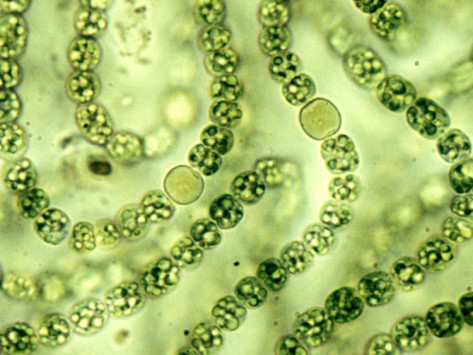
Just in case you wonder how does cyanobacteria looks like. Here's an image of it!
http://www.waterboards.ca.gov/water_issues/programs/bluegreen_algae/docs/cyanobacteria_microscope_big.jpg

Enjoy yourselves!

#syntheticbiology #PLOSSynbio #livestream #interview #cyanobacteria's role in #space #research #NASA today 4pm BST
https://plus.google.com/u/0/events/c2gnundras37n5c08pvst80cgj8

Thursday, 15 October 2015

PhD: A Decision in Life (. or ?)

A last minute plea from a fellow Malaysian to fill in the slot for another PhD student who was supposed to share his/her PhD experience brought me to an eye-opener PhD event by the Cambridge University Biological Society (BioSoc). It was interesting how the event was designed - where types of PhDs available in UK and US were discussed, how to get into a PhD programme, what are the requirements, how PhD is linked to industries (thus no longer confined to academia alone) and finally some form of sharing by a graduate student about the Cambridge graduate experience (that's where I came in).

What I thought was interesting in my talk, of which my boyfriend found it amusing as well is this:
"PhD is not a bed of roses; it is more like walking through the rose bushes where the thorns are poking at us but we'll end up looking at the roses one we get through the bushes".

Other than that, a work-life balance is crucial to stay sane and keep going with our PhD battle. We're all warriors, but remember, we're already first a champion in our lives, when the strongest sperm met the ovum and created us.

I wanted to discuss a bit about the "full stop" and the "question mark" in the opening slide but somehow I didn't. Some people are questioning if they should do a PhD, and some have already decided to do a PhD no matter what happened. Life is full of twists and turns. Ten years down the road, I may not be doing what I'm doing now. But, it is still something I won't regret doing..

So, hang in there, people!


I've attached my slides here (with some info on the deadlines of application for Cambridge).

Monday, 7 September 2015

Never Leave Experiments Alone...

It's norm in research life that we leave something over the weekend to grow, incubate, etc. so that we could have a good start for the week ahead. Likewise, I also did the same most of the time.

The last weekend of August happened to be the last bank holiday of the year in the UK so my boyfriend invited me to visit his family up north. It was a good weekend, and a long one too. We went to the Peak District which is relatively close to his hometown. I wished I brought my proper walking boots so that I could try walking up to Mam Tor. Unfortunately, a pair of simple sneakers was my companion for the weekend. Let's just say, I still savoured the beauty of Peak District from afar where heather bloomed.
View from Mam Tor
Why did I mention such a nice weekend? Oh well, in order for me to not freak myself out after a good weekend, I did set up some cells to grow over the weekend. I ensured the cultures were bubbling with carbon dioxide before I left the lab on Friday. Little did I know what awaited me on Tuesday was a huge shock that some kind individual had turned off my CO2 supply over the weekend! Yes, the conditions of my cell growth was compromised, so I had to subculture them and waited for another day or so before I continued my experiment. I did cry like a sad kitten abandoned by its mother in my boyfriend's lab out of shock, surprise and anger. I couldn't understand why it happened, to the point of questioning my memory if I did turn it on. Thinking back, I was and am very certain I did turn it on and the cultures were bubbling before I left.

Something took me by surprise again on Saturday evening. As you know, recently I am running some experiments which involved electron microscopy. Usually, I do fixing and embedding myself. I started the process of fixation and embedding on Thursday, which meant I had to return during the weekend to refresh the epoxy resin twice a day. I had prepared fresh resin for the day on Saturday morning and then left for a short visit to Burwell to meet up a German friend of mine. An overzealous individual roaming in the imaging center over the weekend had decided to clean up anything that had my name written, so when we returned to the imaging center for the final refresh of resin, I was totally appalled that my resin had gone missing from the stirrer. More upsetting was to find my pot sitting in the oven with so much of waste in it. I felt so sick when I saw the covers which I labeled with my name sitting in the oven covering pots filled with so much of waste. I didn't have my phone with me, else I would have taken a photos of it. I am helping my boyfriend to fix some of his samples which he needs for his publication. So he was with me when I performed the fixation/ embedding process. I'm glad he was with me to witness all these. We had to prepare fresh resin for the evening. I'm saddened by the fact someone is so inconsiderate, especially we sort of knew who was the other person roaming in the imaging center that weekend. I'm not pointing anyone because I can't be sure, but this raises my alarm once again that someone is out to get rid of me.

A threat had been delivered to me verbally on the evening when the outcome of my first year report was out:
"You can either exit gracefully with an MPhil, or if they let you stay, you will lose all your freedom and they'll observe you like a hawk and the slight mistake that you make, they'll show you the door".

The same individual who delivered such statement also told someone in the department that my cakes tasted horrible and he wished a previous PhD student was still there because her cakes were great. Apparently my cakes tasted alright and people do love it. It was vicious and mean to say things like that to a mutual co-worker, especially when this person ate the cakes I made. Unless, of course, he pretended to ingest it but secretly had been throwing them away. That, I wouldn't know.

I am worried. I am appalled. I am helpless. I am in the dark. I am getting depressed and paranoid.

Yet I know, I am not wrong to fight for something I know I can do and to fight against those who had been messing with my potential of doing a PhD for the past one year. And I am receiving help from the University Counselling Services to ensure I remain sane. I am still producing results despite all my health issues and weird things which are going on around me.

Here's an article published on Nature 467, 516-518 (2010) about Research Integrity. Have fun reading!


Friday, 4 September 2015

Living with Depression While Doing a PhD

I stumbled into this blog post on PhD(isabled) accidentally, and found it very relevant to PhD students nowadays. I feel deeply for the PhD student who wrote the article... This part of the article hit me harder because I am going through similar hurdle, though it didn't start off with having depression.

Any form of health problem could slow us down in PhD progression. But it shouldn't be a reason why we are being told we are not capable of doing a PhD just because our health isn't great or that we take longer time than average to complete a task. If one has dyslexia, one will be given special aid so that they can do a PhD. But if one has hormonal problem or depression which slows us down, one is told by those normal, healthy people that we're incapable of doing a PhD. Academia has become such a sorry state at the moment. Equality? What's that? Until I see justice in my case, I don't believe there isn't discrimination...

An excerpt from the blog post I found interesting:
My own experience is that it takes time for medications to kick in, and only with the right medication can I start to do any kind of working through the issues causing the depression. My last severe episode was mostly spent sitting around waiting for things to get slightly better. That sounds a hell of a lot more fun than it was. I don’t know if people who haven’t been there can know how it feels. It really is a fight to get through one day at a time. Depression impairs your thinking. It is harder to reason like usual, or be creative, or whatever it is you’re normally good at. My memory goes completely to pot. I get times and dates muddled up, miss appointments and stand up friends, which is mortifying. So if you start trying to create a new model of some important theory or other when you’re under par, its going to be even tougher than normal.

Is there a problem with people (supervisors and students) seeing that as a sign they’re not actually capable of doing the PhD work when in fact its just a sign your health isn’t great just now? Can it magnify the anxiety if you think if you can’t think yourself well then you’re also not capable of doing the PhD? I wonder if blogs like this one have an important role in getting this crucial, fundamental message across to supervisors, departments and funding bodies.

I’ve tried to get involved with causes like this before. I found I didn’t have the resources to keep up.

I’ve seen friends take on enormous responsibility for campaigns and causes at the cost of their health.

I had serious doubts about writing anything about this. I can only claim to speak from my own experience. I worry enormously about anyone reading this and feeling misrepresented, but at the same time it feels right to say something.

In the end my constant mantra is to put my health first because everything else depends on that.

I can only be politically active within the limits of my health.

I can only be a researcher within the limits of my health, and not even the PhD comes before it.

Excerpt taken from https://phdisabled.wordpress.com/2013/11/15/living-with-depression-while-doing-a-phd/comment-page-1/#comment-1159

Friday, 28 August 2015

Electron Microscopy

Just some brief updates of my latest muse - electron microscopy and immunogold labelling (of which I started last Thursday). Perhaps the antibody I probed was abundantly available, so it's pretty awesome to see that the results was as expected for the wild type. As much as I was disappointed that none of the mutants I'm currently looking at has different phenotype when compared to wild type, the data is definitely useful to form future questions for my work. Exciting times ahead!

IgL of my protein of interest - yay!

TEM image of my Chlamybaby - pweeety!!

Here's the paper which I mentioned about the techniques used for IgL. Jeremy is an excellent adviser to me when it comes to imaging techniques. I do my own fixing and cell embedding, so it's always great to have Jeremy around in CAIC whenever I go over. Thanks a lot, Jeremy! :)


Hope you guys find this post helpful :) Cheers!

Thursday, 20 August 2015

Immunogold Labelling

Today I've got some peace by chilling at the imaging centre to run some immunogold labelling (IgL). My samples had been fixed in epoxy resin (I'll show you guys some pics in action when I'm running it next week). For now, I'm using older ones, mounted on nickel grids. I'm using a modified protocol from Skepper (2000), J. Microscopy 199, 1-36. (I'll link it later)

I'm having research fun and I think research should be fun. Science is mind blowing and fun. Unfortunately some people have very distorted and disillusioned vision of what "fun" and professionalism in science means.

Right now I'm battling a birdman who wants to kick me out because he's totally disapproving my idea of fun in science. Calling me unprofessional, unproductive and unknowledgeable is low if not bitchy. Telling untruths and causing me this much of troubles at this point only caused me to find him disgusting, and crazy. Stalking me under the disguise of taking my attendance without me knowing is mental harassment.

Maybe some would think that I'm wasting my time battling against a silent but dangerous birdman but if I don't fight until the last drop of my blood runs dry, I'd do myself the biggest harm. As much as I'd like to live in peace to do a PhD, the evil birdman thinks he can show me the door easily. Making my research life difficult is only making the birdman's life worse. I'm a resilient wild grass. Have always been that way.

The birdman said he'd not help with carrying of gas cylinders for me from now on. I'm perfectly happy that he refuses to help me, though I'm totally pissed with his unprofessional and childish behaviour. Thanks to this behaviour I have more conviction that I should fight till the end.

St. Paul mentioned about him running his race till the end. I need to put up a good fight too. If not, I'll be disappointing myself in the end.

Wednesday, 29 April 2015

New Toy: Lenovo Miix 10

This is the first time I used a Windows 8 tablet. Though it was an Amazon Warehouse deal, but to me it is still a new toy nevertheless. In fact, this time round, as much as it is a toy gadget, but I'm justifying its usage as an option to have a "work holiday" when I want to travel, yet still be able to work intermittently. It does help when I draw strength from seeing new stuffs outside Cambridge and then form some new ideas for my experiments.

Enough with the justifications, now back to the toy itself. I spent about £150 on this warehouse deal for a "Used-Very Good" Miix 10 Windows 8 tablet. It comes with original Windows 8, and Microsoft Office 2013 Student package, which helps a lot since I am using a Windows 8.1 laptop with Office 2007. I wanted to install Office 2013, but the product key only allowed ONE single installation *sad face* but I already have Office 2007 so it's pretty much the same.

Let's talk about the operating system (OS). When I purchased my laptop, it was on Windows 8. I wonder how many times I complained about how unfriendly it was. The signature Start button of all previous Windows (95, NT, XP, 7, Vista...) was removed, and I couldn't find my way around for the first few weeks. I sorta got used to it but I didn't like it at all. When Microsoft introduced its update to Windows 8.1, I freely embraced it. The signature Start was back!!! My days from that point forward were great, and are still happy with it. Now, Miix 10 is the first generation to Lenovo's 10.1" Windows tablet, and yes, it is no longer selling on Lenovo's website. Hence, I know it would come with Windows 8. Oh my horror! Then again, I could update it to Windows 8.1 so I didn't worry too much about it.

Though it was mentioned that the hard disk of Miix 10 is 64 GB, the space available was only about 45GB. I got over-excited when I received the tablet, so I started installing my usual need - Mendeley reference manager. Programs eat up disk space like a hungry PacMan. So when I finished with the necessary updates of Windows 8 to enable the upgrade to 8.1, the HDD didn't have enough. Well, finally after numerous uninstallation of unwanted apps,  I finally managed to upgrade to Windows 8.1.  It was as though life returns to the tablet finally.

Other pros and cons of a brand new Miix 10 which I found on the usual tablet review websites - I do agree. So I won't comment much on those aspects, since they'd know better than I do. I would comment on the basis of my current profession as a PhD student in the process of writing up the first year report to be upgraded to a PhD candidate. Since I am writing a lot, so Office 2013 (as I mentioned previously) is an additional bonus so one point for Miix 10. However, the annoying part that the virtual keyboard still pops up though it is docked to the external keyboard will be something I need to address and consider in future.

I'll share the part II of my encounter with this tablet and a possible decision of whether I will be keeping it in the next two weeks or so. My short trip to Lisbon will be an ultimate test for Miix 10 if it is suitable for my use.

Time to return to reality and work on my project. Till then....

Tuesday, 7 April 2015

Keep Calm and Start Writing!


How apt is this "keep calm" phrase!

Some of my friends have begun writing their theses, some had completed and submitted. As for me, I am just starting my PhD journey (finally!) when I joined this lab (Physiological Ecological Group). Looking at how four months flew off like lightning, I should begin writing the first year report soon since the deadline is on 1st June.

The reluctant mind and body says, "There is still time. Chillax!" But both know better that it is only a lie. One thing would lead to another, and there are thousands, if not millions of papers I need to wade through in order to seek for the knowledge. I have yet to start writing the ONE word needed for me to begin.

It's time to think. It's time to start writing. I shall.. Within this week. Now, I shall give my pair of fatigues eyes a rest. Ciao!

Monday, 1 December 2014

Mating Chlamydomonas reinhardtii

I find this paper by Jiang, X. and Stern, D (2009) published in Journal of Visualized Experiments super cool. It's about mating and separation of Chlamy's tetrad. It's laborious, obviously, but it seems to be something fun to pick up for my PhD. Let's see if it's possible... *chuckles*

Briefly, Chlamydomonas usually exist in haploid single cells, formed by the "mating" of two strains of opposite mating type (plus and minus). An explanation of the diagrammatic representation of the Chlamydomonas life cycle shown below is taken from Zhao H et al., Genes Dev. 2001;15:2767-2777 (click on the link for the full paper). Gametes are formed when vegetative mt+ and mt− cells undergo gametogenesis induced by nitrogen deprivation (middle left). When gametes of opposite mating type (or sex) are mixed together, they adhere to each other via mating type specific adhesion molecules (agglutinins) on their flagella to form large collections of agglutinating cells (upper center). Flagellar adhesion induces gamete activation that leads to release of cell walls, erection of mating structures at the apical ends of the gamete cell bodies (upper right), and several other cellular and biochemical changes that prepare the gametes for cell fusion. All of the events associated with gamete activation can be induced in gametes of a single mating type by incubating them in dibutyryl cAMP (Pan and Snell 2000b). The tips of the mating structures fuse to establish cytoplasmic continuity, and soon thereafter the two gametes merge completely to become a zygote (lower right). Zygote formation can be extremely rapid, and within 5–10 min after gametes are mixed together, 70%–90% of the cells fuse. Immediately after cell fusion, the zygote developmental pathway is initiated and at 2–4 h after fusion, the zygotes form large aggregates of tightly adherent cells (lower center) as a consequence of synthesis of zygote-specific extracellular matrix molecules and cell body adhesion molecules. At about the same time, the mt− chloroplast DNA is degraded. After an obligatory several days in the dark and upon return to nutrient-rich medium, meiosis and germination occur, and each zygote forms four progeny, two mt+ and two mt− vegetative cells (lower right). Vegetative cells undergo mitotic divisions until the nitrogen is depleted from their medium and the cycle begins again. Diagram modified and adapted from Figure 1 of Pan and Snell 2000b.

Source: http://genesdev.cshlp.org/content/15/20/2767/F1.large.jpg
Sounds fun. Enjoy watching the almost 10-minute long video. I found it rather exciting! *Thinking cap ON*

Tuesday, 18 November 2014

Introduction to Chlamydomonas reinhardtii

I need to write a 5-page proposal today, so I'm getting myself acclimated by doing some free writing here.

An explanation - I'm switching department and supervisor for the rest of my PhD. A difficult decision to make after spending (almost with futile effort) almost 10 months in BioAnth. It's not that I hate human evolutionary genetics, but it's not my cup of tea. So, upon discussion with various people, especially with my current supervisor and college graduate tutor, I embarked on the search for a new project, new supervisor, new department... Hard to bid goodbye, but it's better for everyone, especially for myself. I've nothing to lose in the first place, except some loss of time, but it's for the better.

If the official approval is granted, then I will be joining Professor Howard Griffiths' lab to work on Chlamydomonas reinhardtii together with an awesome team to eventually contribute to the CAPP (Combining Algal and Plant Photosynthesis) project.

An brief introduction of this species which we work on - the Chlamy:
Source: http://upload.wikimedia.org/wikipedia/commons/1/19/Chlamydomonas_TEM_04.jpg
If you could see the area which is densest in the TEM photo, that's our group's interest. The pyrenoid story. There are various aspects which we are looking into, but for now, it shall be a suspense, as it's time for me to run back to the proposal.

Yes, I'm a happier me after the 10 months of struggles, though I'd have tonnes of work to be completed in lesser time than others. Yet, I am still happy and glad. I am thankful to God for answering my prayers and to St. Jude for interceding for me. Miracles do happen, if we also work in tandem with Him.

Thursday, 16 October 2014

Stupid Fish, Really??

It is hard for me to explain my current situation openly right now, but tonight I shall listen to Einstein. 

Hear ye all my fellow PhD friends out there! Dear Einstein and his wisdom!
Source: http://om.symphonyoflove.net/wp-content/uploads/2014/09/Albert-Einstein-Everybody-is-a-genius.-But-if-you-judge-a-fish-by-its-ability-to-climb-a-tree-it-will-live-its-whole-life-believing-that-it-is-stupid.jpg

Tuesday, 23 September 2014

Ubuntu on VirtualBox

I began to realise the need to eventually get a computer with Linux/Mac OS since many of the softwares developed for genomic analyses are Linux-based softwares. Though I might be an ardent supporter of Android phones and Windows 8 computers, for the sake of work, I probably am going to request for money to buy a computer with Linux or Mac environment.

Right now I'm in the midst of the troubling question if where I am currently is matching to my real interests. I felt ashamed, fearful and disappointed that I am where I am right now, and it didn't help when everything I proposed didn't work and I don't seem to be very enthusiastic about this. I know it is a sign I am not suitable to be in this area of research, as much as I wish to feel belonged here.

Back to what I've learned for the past nine months... More aware of computer language for sure. I might not speak any particular language yet. I am at beginner's level in Spanish and Japanese if I were to compare to "speaking" Python 3 and R.

Right now I'm installing Ubuntu on Virtual Box with the help of wikiHow's instruction. Very precise and convenient indeed. Now I can try to install some of the softwares which I desire to use. Let's see if it works.

My Windows desktop with Ubuntu running on VirtualBox

Thursday, 4 September 2014

Night Owl or Early Riser?

These days I'm finding it tough to stay awake in the day time and to fall asleep at night. A bit of a mess but I guess it's normal for any graduate student to go through such phase. For a while I identified myself as a night owl, working better after sunset. Then I found joy in rising early and sleeping early. What came next was I screwed up my own biological clock by not being disciplined. I can't be both an early riser and a night owl but the greed of wanting to buy more waking time to get something done tend to mess up the circadian time of this poor body. Outcome would always be the phase where I have to deal with my weird and unproductive sleeping pattern. Ha ha ha!

It takes a while to sync back to norm. I do recognise the importance of sleeping at night. Working from home these days doesn't help with regulating sleeping pattern or discipline on when to work and when to rest, since my life is entwined in the research which I want to do, which is a series of things done while sitting in front of this laptop. Reading papers, or working on my R skills, or figuring some stuffs out, or feeding my enthusiasm of picking up Korean language while watching yet another an episode of Korean drama, or having a meal. Leaning towards a very unhealthy lifestyle, but that's life of many graduate students. It's an amazing cycle of sleep, eat, research, eat, sleep. I sometimes wish I have lab work which would force me to walk out of this comfortable and warm nest fully equipped with the right lighting to work. Yet, I probably have my whole lifetime ahead to work in the lab in future.

Probably lots of coffee would help with staying awake in the day? Or maybe I should just quit coffee? Nah... Life without the coffee aroma... is a loss.

Source: http://my.englishclub.com/profiles/blogs/early-bird-or-a-night-owl
I guess right now it's more important to get myself on my feet with some regularity of work hours. It is getting back at me, this weird schedule and sleeping pattern.

I should blog about something technical which I sort of picked up last month. Interesting personal achievement which I forgot to pat myself and reward myself for doing it right.

Time for lunch!

Wednesday, 27 August 2014

Budget, Scholarship and Happy Graduate Student

Yes, I know I need to do my work, but I can't help but to write this post.

In my previous post, I mentioned I am just a poor scholar here at Cambridge. I compared my currently scholarship with the Erasmus Mundus masters scholarship which I received for the past two years, which was a very handsome amount of money. I know this can't be compared. The payment system is different. I used to receive monthly scholarship allowance, plus mobility fund every start of 6-month term. I was pretty much able to spend when I needed to.

Source: http://i.telegraph.co.uk/multimedia/archive/01811/cash_1811300c.jpg
As for now, my scholarship installment comes thrice a year. It means I get 4 months worth of scholarship allowance in one-go. It gets dangerous when the mind is switched to "I have tonnes of cash to spend" thought. It took me about 6 months to psycho myself back to the mindset that I am not as poor as I think I am. If I budget properly, I can stretch every penny I have for food, entertainment, transport, travels, and SAVINGS.

I find this article on "Student MoneySaving Checklist" highly useful for those who need some ideas on how to stretch every penny we have. What I do is within the checklist of 50+ items of how to save as a student.

Source: http://www.studentuniverse.com/student-blog/wp-content/uploads/2012/10/budgetingpiggy.jpg
Yes, I do monthly compulsory savings. And no, I don't touch the money at all. That's my emergency cash in case I need to fly back to Malaysia at any point of my graduate studies. It is still not enough to fly back, but if I start touching it habitually it, it'll never be enough. I am using Llyods Bank, and the best thing is I could have three different accounts under the same name, so I started a compulsory savings account which the money from current account is auto-debited monthly. I also have a savings account for all the accommodation money I need to pay per term. My current account is almost always out of cash, with the lowest I got to was about £10 in it (end of the month kind of situation).

It's not easy to start budgeting, but once we get the feel of it, we'll be living a happier graduate student life!

P/S: I still do get to travel a bit with the limited budget I have...

I saw Giant's Causeway in Northern Ireland end of June 2014, thanks to the budgeting I made from the start of the year.

Coffee and Graduate Students

As I venture deeper into the journey of a graduate student, I find that coffee becomes a part of my life, as much as I don't want to be "addicted" to it. I'm trying to deny the fact that I might be a coffee addict at heart, refraining myself from overdosing since the forensics background I've accumulated reminds me anything too much isn't good for me. So far, I'm fully aware that any caffeinated drinks from Nescafe would cause me drowsiness. I suspected the case when I tried staying awake to study using Nescafe Gold (yes, I only go for the best stuffs) but I ended up sleeping for hours after that cuppa. It didn't help me to study more, but my body was indeed well-rested due to the blood-pumping caffeine.

When I speak to my graduate friends, I noted that almost everybody (shy those who are allergic to caffeine, and those who drink tea like water) would have at least a cuppa a day. Some would be at the extreme of consuming more than 6 cups daily. On average, about 2 to 3 cups. As for myself, it is once a day, in the morning when I have my breakfast, usually around 9ish. Today I woke up late so I got my brunch by 11am. According to this website, the best time to drink a cuppa coffee is between 9.30 am to 11.30 am.

The initial realisation came when I stopped by Costa in Grand Arcade daily to grab a cuppa on my way to the department. I tried to be more environment-friendly, so I bought its travelling mug. Uh-huh... it stuck with me for two weeks, and I noticed how my purse bled to death. I am but a poor scholar, honestly. Money should be spent on real, filling food. So I had to think of alternative... While Costa can be my choice when I hang out with friends. Always - the hazelnut flavour!!!!

Source: http://upload.wikimedia.org/wikipedia/en/thumb/4/42/CostaLogo.svg/1024px-CostaLogo.svg.png
I was deciding between a coffee maker and a cafetiere. I chose the latter, not because I couldn't afford it but due to the fact I don't have much table top space to keep it. A stainless steel Grunwerg 3-cup cafetiere quenched my thirst of brewed coffee. Adorably shiny little thing that my heart fell in love with. Got it from Amazon using the prize money I got for being the kid with best performance of my MSc. degree. Wheeeee!!! Now I can have non-instant coffee at home. Whenever I want to.

Source: http://ecx.images-amazon.com/images/I/21ovJ5WYYcL.jpg
Initially I stick to ground coffee from Costa, as much as I like it fresh, it's not the same as what I get in the shop. Of course, no frothy milk to accompany with it does make a difference. That's when I re-discovered my love for OldTown White Coffee (hazelnut flavour) from my home country, Malaysia. Yet, a pack only consists of 15 sachets, and I died when I found I was left with one sachet the first time my ex-student brought my "supply" from home. Thank God for my kind-hearted best friend who came back for his graduation, I received two packets. And from a friend who finished her Mphil, I inherited her leftovers. Yippee!! That will keep me going for a while. But I need to look for alternatives...

Source: http://i01.i.aliimg.com/wsphoto/v0/669333435/Malaysia-import-old-town-Old-Town-White-Coffee-Hazelnut-flavor-instant-3-in-1-600g-horse.jpg
One random shopping day at Tesco Extra in Bar Hill, I saw this lovely red packet of ground coffee with the label "Hazelnut". I don't know much about this Edinburgh Tea and Coffee Co. but I supposed the price reflects on its quality. It was priced at £3.70. Not expensive, but higher priced than others. I finally made the first cup today. Completely took my heart away. I've found the non-sugary alternative to my OldTown White Coffee.

Source: http://coffee4.me/wp-content/uploads/2014/04/Edinburgh-Tea-and-Coffee-Company-Hazelnut-Ground-Coffee-227-g-Pack-of-3-0.jpg
So, I shall continue my work now. Till then... Have a cuppa!


P/S: Many would agree with me, right??

Source: http://phdcomics.com/comics/archive/phd070513s.gif


Wednesday, 6 August 2014

PLINK for Windows

As I'd have to pay for every Gigabyte of internet used, I was a little concerned about working in the comfort of my room. The move to a room with larger window overlooking the backyard where a couple of squirrels and a pair of pigeons reside at the pine tree really helps with a better working at home environment. I'd need to work in the department once in a while, but the alternative is as good as the office, so I feel comforted. And finally, a more sturdy desk chair is provided to me today! Yay!

This is the view from my desk: perfect, isn't it? Getting back to work :)


Back to the topic, since I'm using a laptop installed with Windows 8.1, I was thinking of running PLINK on the laptop, provided I have enough HDD space and RAM, of course. I think with 6GB of RAM, I should be able to do quite a bit before I crash it. A tiny search on PLINK website led me to the MS-DOS version of PLINK, which means I could do the genomic analysis offline without using my group's server! Another yay!

Here's the instruction as per PLINK website on how to download and install PLINK on Windows... I think the links on my page would lead you to the download site, further instructions and manuals for PLINK. Enjoy using the whole genome association analysis toolset!

This page contains some important information regarding how to set up and use PLINK. Individuals familiar with using command line programs can probably skip most of this page.

Download


PLINK
 is now available for free download. Below are links to ZIP files containing binaries compilied on various platforms as well as the C/C++ source code. Linux/Unix users should download the source code and compile (see notes below).


These downloads also contain a version of gPLINK, an (optional) GUI for PLINK. Please see these pages for instructions on use of gPLINK.


Remember This release is considered a stable release, although please remember that we cannot guarantee that it, just like most computer programs, does not contain bugs...


PlatformFileVersion
Linux (x86_64)plink-1.07-x86_64.zipv1.07
Linux (i686)plink-1.07-i686.zipv1.07
MS-DOSplink-1.07-dos.zipv1.07 (to be posted later today, 30-Oct)
Apple Mac (PPC)plink-1.07-mac.zipv1.07 (to be posted next week)
Apple Mac (Intel)plink-1.07-mac-intel.zipv1.07
C/C++ source (.zip)plink-1.07-src.zipv1.07

One more thing... If you download PLINK please either join the very low-volume e-mail list (link from Introduction page) or drop an e-mail to plink AT chgr dot mgh dot harvard dot edu letting me know you've downloaded a copy.


For old versions of PLINK please visit the archive.


Debian users PLINK is available as a Debian package, see these notes. Note, the executable is named snplink in the Debian plink package.

Development version source code


You can download the very latest development source code in this ZIP file. This is really, strongly not recommended for most users. The code posted here could change on a daily basis and is not versioned.
Development source code versions have a p suffix, meaning pre-release. For example, if the current release is 1.04, the next stable release will be 1.05 and the development code will be 1.05p. Note that 1.05 may differ from 1.05p and as noted before, from day-to-day the 1.05 development code may change in any case.
The principle reason for including the source code here is to allow access for specific users to specific, new features. These features are described here.

General installation notes


The PLINK executable file should be placed in either the current working directory or somewhere in the command path. This means that typing
plink


or
./plink


at the command line prompt will run PLINK, no matter which current directory you happen to be in. PLINK is a command line program -- clicking on an icon with the mouse will get you nowhere.
Below, on this page, is a general overview of how to use the command line to run PLINK. The next sections give details about how to install PLINK on different platforms.

Windows/MS-DOS notes


Unzipping the downloaded ZIP file should reveal a single executable program plink.exe. The Windows/MS-DOS version of PLINK is also a command line program, and is run by typing
plink {options...}


not by clicking on the icon with the mouse. Open a DOS windows by selecting "Command Prompt" from the start menu, or entering "command" or "cmd" in the "Run..." option of the start menu.


The folders c:\windows\ or c:\winnt\ are typically in the path, so these are good places to copy the file plink.exe to. You can copy the plink.exe file using Windows, as you would copy-and-paste any file (e.g. using the right-button menu or the keyboard shortcuts control-C (paste) and control-V (paste).


Alternatively, if you know that you will only ever run PLINK on files in a single folder, then you can paste plink.exe into that folder, e.g. C:\work\genetics\. The disadvantage of this approach is that PLINK will not be available from the command line if you are in a folder other than this one.
Once you have copied plink.exe to the correct location, you can test whether or not PLINK is available (i.e. in your command path) by simply typing
plink

at the command line. You should see something like the following message:
     Microsoft Windows XP [Version 5.1.2600]
     (C) Copyright 1985-2001 Microsoft Corp.

     C:\>plink

     @----------------------------------------------------------@
     |         PLINK!       |    v0.99l     |   27/Jul/2006     |
     |----------------------------------------------------------|
     |  (C) 2006 Shaun Purcell, GNU General Public License, v2  |
     |----------------------------------------------------------|
     |       http://pngu.mgh.harvard.edu/purcell/plink/         |
     @----------------------------------------------------------@
 
     Web-based version check ( --noweb to skip )
     Connecting to web...  OK, v0.99l is current
 
     *** Pre-Release Testing Version ***
 
     Writing this text to log file [ plink.log ]
     Analysis started: Fri Jul 28 10:07:57 2006
 
     Options in effect:
 
 
     ERROR: No file [ plink.ped ] exists.

Do not worry about this error message -- normally you would specify your own PED/MAP file names to analyse (i.e. the default input filename is plink.ped).


Please ask your system administrator for help if you do not understand this.


HINT In MS-DOS, you can to increase the width of the window to avoid output lines wrapping around and being hard to read. To do this under Windows XP DOS: right click on the top title/menu bar of the window and select Properties / Layout / Window Size / Width -- increse the width value to a larger value (e.g. 120, or as large as possible without the window getting too big to fit on your screen!).  

Friday, 1 August 2014

Anxiously Taking Off...

Source: http://upload.wikimedia.org/wikipedia/commons/6/64/Malaysia_Airlines_Boeing_777-200ER_9M-MRO_IST_2012-1-23.png
Finally, after 6.5 months, the first phase of my PhD is sort of taking off. I hope that this first phase will reach its final destination of a first year report which enables me to officially become a Cambridge PhD student, rather than the current probationary status. This post also serves as a tribute to all the passengers of MH370, the aircraft which also the last location where my cousin worked as the cabin crew. Despite not knowing him well when he was around because of our large age gap, I know David, my cousin, worked hard his whole life, and went through various struggles. He never gave up on life, on love. I wish I can learn this attribute of his.

I am nervous, and anxious too, especially after such a long hiatus on research due to my health, the travels, and the graduate conference (as much as I tried to deny the fact that I did put in much time and enjoyed doing it). Sometimes I dislike the fact that I could catch a cold too easily, and with the new addition to my medical history of acute sinusitis, my sinuses become infected twice this year alone. All these took time away from me trying to work hard because I sleep for days. Right now, I am worried I can't meet the par of passing my first year though I have another 3 months before the reality sets in. What if I have to go home because I can't complete year 1 and pass this probation? Everyone knows he/she has worked hard for a year, so it is natural passing first year isn't difficult. For me who spent most of my time sleeping and idling, it is as natural as them, only I'm at the other side of the fence. Working hard is not my forte. Yet, I know it takes hard work whether or not I'm good at it.

I saw this online when I was searching for the quote... "Don't be upset with the results you didn't get from the work you didn't do".

Source: http://www.savingadvice.com/articles/wp-content/uploads/2013/08/insecurity.jpg

I guess me browsing through the Wellcome Trust Sanger Institute is a cause of my anxiety. There is a group who is doing an awesome job with malaria. I saw their papers and found those interesting. Who am I to compare to them? All highly-skilled bioinformaticians and biologists; big brains gathering big data as a team of researchers. I need to overcome this insecurity I feel from within, really.

This is my behind-the-scene, nothing too bright or shiny, as how anyone would see a Cambridge graduate student should be. We all are still graduate students, just like anyone else in the world. We struggle too, and maybe, more than the rest of the world.

Tuesday, 15 July 2014

Graduate Studies at Cambridge

I wrote an article to be included in the graduate section of Outreach 2014 booklet of Cambridge University Malaysian Society as the committee prepare themselves to reach out to the students who might want to apply to Cambridge for the next academic year.

For the academic year of 2013/2014, 37 Malaysians out of the 158 who applied to Cambridge received confirmed admission to graduate courses ranking 11th among the other countries with success rate of 23%. There are two categories of qualifications for graduate studies: courses with taught elements, and research programmes. Either category, the best way to research on the available programmes and the criteria of admission is via the Graduate Admissions website of the University of Cambridge.

A little about applying to graduate studies at Cambridge:
It is crucial if you are planning to apply for research programmes to communicate with your potential supervisor to find out more about the research group and the interests of the group. It doesn't bring any harm to have a clearer idea of what the expectations of your supervisor are before you apply. Also, it also helps you in your decision-making process. Apply for admission only when you are certain that your potential supervisor is keen to having you. Online application makes it so convenient! As my basic degree was awarded by Malaysian university, which was not conducted fully in English, I was required to submit proof of English competency. The accepted English Language Tests include IELTS (International English Language Testing System) Academic, CAE (Certificate of Advanced English) with grade A (with other conditions to fulfill) or CPE (Certificate of Proficiency in English) with grade A or B. TOEFL is NO LONGER accepted according to the Home Office requirement. Minimum required score is according to the course applied. In the application for research programme, a research proposal would be required, and this can be discussed between you and your potential supervisor.

Other than that, it is important to take notes of the deadline of applications to funding and scholarship. If your potential supervisor has a research grant to sponsor you, then it is wonderful. If not, you might want to research on other available scholarships, as well as to apply to the Cambridge Trust fund and Gates Cambridge scholarship when you apply for admission. Usually the deadline for the latter two is around December.

In my opinion, the important elements to successful application include: 1) Excellent English competency, 2) acceptance of your research proposal by the department which you are applying to, 3) acceptance by one of the colleges, 4) financial conditions. Be meticulous and prompt with the list of conditions to fulfil the admission process!

Once all the conditions are fulfilled, the Graduate Board of Studies will award you with the offer letter and CAS for you to apply for Tier 4 student visa. The CUMaS community will be at Cambridge waiting for your arrival.

A little on the life of a Cambridge graduate student:
During the High Table in the college...
I completed my BSc. (Biotechnology) in University Malaysia Sabah and hold the Erasmus Mundus Masters in Forensic Science awarded by the consortium of host universities (University of Cordoba, Spain, Egas Moniz University, Portugal, University of Lincoln, UK). The university systems which I had experienced previously were different from my current experience here, as University of Cambridge is a collegiate university, and all students are members of a college. I am a member of Fitzwilliam College. Usually graduate students would be offered a room in the college, either in the main college site or the college houses. From what I know, all colleges provide housekeeping services to college accommodations. Each college has its own traditions and system, which you could read more on its website. At term time, Fitz organises formals twice a week and members of the college who wish to attend the formal could make reservation via our college account. Once a year, the graduate students are invited to dine with the Master and fellows at the high table. I am assigned a graduate tutor in the college whom I try to meet at least once a term for a chat. Also, graduate students belong to the Middle Combination Room (MCR) community of the college, where the MCR committee would organise events for the graduates in the college. The MCR room of Fitz is housed in the Grove, which used to be the abode of Emma Darwin, the wife of Charles Darwin. I find my college a very friendly yet conducive environment for my stay as a graduate student.

Besides my supervisor, I have been asked to nominate a secondary adviser according to the statute of the university. All research work is being supervised by the department. Being in my first year, I am still a PhD (probationary) student. Only upon submitting a first year report and passing it would I be a proper PhD student. I look forward for the day to come end of this year! Though it takes a lot of hard work to be a graduate student of Cambridge, it will be worthwhile to work in an environment so conducive and supportive of on-going research.

For more information about graduate admissions, please visit this website:


Wednesday, 25 June 2014

The Big Q

Finally, I've arrived to the stage of forming the Big Q for my PhD research! *tears of joy*

MALARIA shall be my journey for the next three years (and whatever that might pop up as this continues).

I have a report deadline in 1.5 hours with the MA to earn the upgrade from "cause for concern" to "fair" on his supervisor report. Scary!!!!

Source: http://www.euvaccine.eu/sites/default/files/uploads/images/diseases/EVI_Pf_cycle_logo_110225.png

Monday, 23 June 2014

Literature Review

In the midst of searching for the light at the end of a dark tunnel, I begin to wonder how to do I wade out of the marshland of "Hows?". I know more reading, and more questioning, might help the process. And I wish for more shortcuts to understand the papers I'm reading as I form that big Q. It seems to me that everybody seems to have a relatively easy time to form the big research Q, minus me. When will I be able to form a proper big Q which is good enough to impress the MA?
Source: http://static2.quoteswave.com/wp-content/uploads/2012/01/The-big-question-is-whether-you.jpg

Everyone has his own method of literature review. Mine may not be the latest method. This is just what I know and most comfortable with. Let's return to MY way of systematic literature search:

  1. I start with the journal which is directly related to my topic of interest.
  2. Chronologically, I chose to start from the latest discoveries - some research paper with direct interests which seems pretty similar to my research group's methods of interest.
  3. For more comprehensive understanding of the topic, I choose the latest review paper.
  4. It is important to take note of the list of references of those papers I am reading.
  5. More reading, and note taking.
This is a method I found published on the student support website of UCLan..
Source: https://www.uclan.ac.uk/students/study/library/literature_search_tips.php

I'd recommend the use of Mendeley desktop to aid the walk in the forest of references. So far I find using a reference manager very helpful and systematic. Others might have different recommendations.